World Meningitis Day 2024


 Apple Podcasts
 Spotify
 Audible
 Amazon Music
 Castbox
 Castro
 RSS Feed
 STORIES OF RESILIENCE
Meningitis Survivors and Advocates Share Their Journeys
Welcome to another special and poignant episode of the Destiny is Debatable podcast. As we acknowledge World Meningitis Day on October 5th, we are honored to present a collection of heartfelt stories from around the globe, shared by individuals whose lives have been profoundly affected by meningitis.
Christine Bennborn from Sweden recounts the harrowing experience of losing her son, Mathias, to meningitis and sepsis in 2019. Driven by this tragedy, Christine founded Meningokockfonden in Sweden, dedicating herself to spreading awareness and advocating for better vaccination policies.
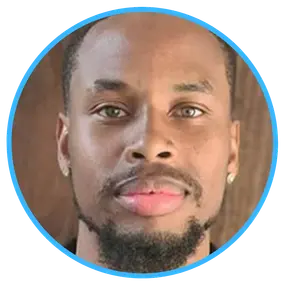
From Georgia, Shaquille Hodge, who transformed his grief into action after his wife, Percilla, succumbed to meningitis while they were on vacation. Shaquille established the PAMAH Foundation, named in honor of his wife, to educate and raise awareness about this silent killer through car shows and scholarship programs.
Katie Thompson, a meningitis survivor from South Carolina, who faced excruciating pain and near-death but emerged as a passionate patient advocate. Katie's story is a testament to the resilience of the human spirit and a reminder of the importance of vaccination and awareness.
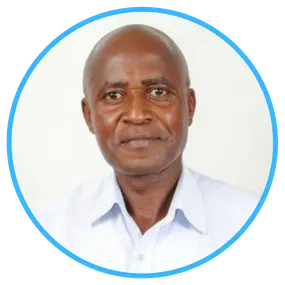
Claytone Musungu from Kenya shares his journey of founding the Meningitis Information Foundation in Nairobi, Kenya after witnessing the devastating impact of meningitis on a close friend’s family. Claytone's efforts to educate the public and work with the government aim to defeat meningitis by 2030.
Jayme Fahrer from New Jersey, who survived bacterial meningitis in 2009. Despite enduring severe physical and mental challenges, Jamie's determination to spread awareness and support others is truly inspiring. Her story emphasizes the urgent need for prompt medical care and the importance of prevention.
Tom Nutt, Chief Executive of Meningitis Now in the UK, sheds light on the critical work of his organization. From funding research and raising awareness to supporting affected individuals, Tom’s insights underscore the multifaceted approach needed to combat this disease. He also highlights the importance of vaccination and knowing the signs and symptoms of meningitis.
John Grimes wraps things up with a reminder of hope. Through his experience with meningitis, he quickly learned that survival wasn’t the end of his journey, it was just the beginning. John also offers his advice on the importance of acting now to shape your life into the future you want.
Throughout this episode, you'll hear powerful narratives of loss, resilience, and hope. These stories serve as a compelling reminder of the impact meningitis can have and the importance of continued efforts to spread awareness and promote vaccination. By sharing their experiences, our guests not only honor their loved ones but also strive to protect others from this preventable disease.
Through these efforts we will not just defeat meningitis, we’ll make meningitis nothing more than a historical footnote.
.:: Destiny Is Debatable is hosted by author, speaker, and meningitis survivor John B. Grimes, produced by Cemblem, and supported by Executive Producer Erin Grimes.
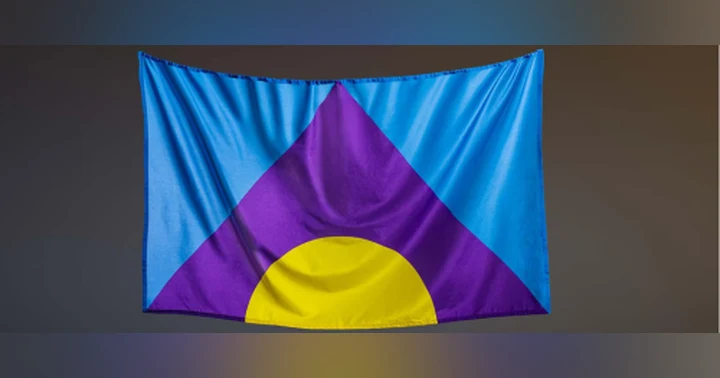
Explore the book at DestinyIsDebatable.com. Learn more about John's meningitis advocacy through Shots 4 Meningitis and discover the Purple Means More national awareness campaign.
0:00 Music. Welcome to destiny is debatable a podcast and movement that will encourage you to build your life into the one you want, here's your host a guy who knows possibility is always a possibility john grimes. Hey hey hey greetings welcome back thanks for tuning in subscribing and supporting the podcast experience. October 5th is World Meningitis Day, an opportunity to shine a light and spread awareness about a vaccine-preventable disease.
0:47 And once again this year, we have spanned the globe to collect stories about people that have been affected by meningitis and have them share their experience in their own words. My name is Christine Benborn. I am a mother of two. I live in Sweden, in Europe. I am also a founder of the Meningitis Organization here in Sweden. My professional job is a CFO. So I'm not a doctor or anything like that. So whatever I say, I have just learned by myself through various organizations and so on about meningitis. I also am part of the International Organization, Confederation of Meningitis Organizations, where I was in the advisory council representing Europe.
1:35 How was I affected by meningitis? Well, it all started in 2019 when my oldest son, Matthias, woke up one Sunday. Not feeling very well, and it quickly turned out that it was much more than a regular flu, which the doctors at the healthcare center said that he had. And the day after, he turned ill much more than he was from the beginning. And he basically died in front of our eyes on the grass outside our summer house. When the doctors told us that he had died from meningitis and sepsis, we were like big question marks because we had never heard about meningitis before.
2:20 So we had no clue what they were talking about. out, I searched on the internet for meningitis to find out what it was. I quickly came to foreign sites and I decided I need to do something about this because it can't be that a country like Sweden do not have information about this horrible disease in the media or even when you search on the internet. So after the funeral, basically, of my son, I started to create an organization here in Sweden. And the basic thing is to make sure that people get the information about the meningitis, what it is, what about the symptoms, the quickness of the sickness.
3:10 When you get sick that you need to get immediate medical attention and that you also can get vaccinated so that is basically what I work with apart from my normal job is to share information about the meningitis through social media through we have been on tv four times I've been talking some policy here in Sweden I've also been at the conference I've been teaching at some schools for for nurses, just to share the awareness about the disease and how horrible this disease is. I can say that I have seen an effect on it because when it all started for us in 2019, it was hardly, as I said, any information about it in the Swedish sites that you came to on the internet. Now it's much, much more.
4:02 It's more like vaccine centers and also medical centers that are writing about it. We have produced leaflets, we have produced a folder. Small ID cards with the symptoms that we send out for free to anyone who wants it, just to share the awareness about the disease. And especially also that you can get vaccinated about it. Because here in Sweden, this vaccine is not part of the national vaccination program, which I think is really, really bad. Because this is a very, very serious disease that you can die from. I think it's just wrong that it's not part of the vaccination program.
4:46 This is also something that I work with to share that information specifically to the risk groups here in Sweden. The risk groups are the small children from zero to about five, and then the teenagers and the young adults. They are more than 50% of all cases here in Sweden. So that is my focus group to make sure that they get information about this disease. I think it's working because I get the information from people who find our sites, our Facebook site or our Instagram and so on, that they have seen the information. And also three families have contacted us, said blunt out that you saved my daughter and my son's life because we came to the hospital in time.
5:34 So they got the antibiotics and survived. vibe. And then I can see that even though I lost my son, I will never get him back. I've done something for the greater good for everybody else. And it means something. It's to honor his life, basically. I will continue to do that as long as I live, basically. My name is Shaquille Hodge, and I was first introduced to meningitis in 2018 when my wife was taken by it um so it means a lot to me that i spread the word to people because i had no idea on what it was or how drastic and how deadly it is so my wife was a 27 we were on vacation and then one day she just woke up sick and within 24 hours she was in the hospital in a coma not waking up, and i'm just losing my mind and they keep saying meningitis meningitis and i'm just like like, what is meningitis?
6:31 So, you know, I hopped on my phone and I start researching, researching, researching, and I'm finding out all this stuff about meningitis and how deadly it is and how quick it is and how silent it is. That was one of the things like, wow, I never knew about meningitis. So when she passed, I was like, I have to do something because my wife was the type of person who loved to help people, who loved to love. She was a neat freak. So it was kind of crazy that she was the one to get sick, but I was like, I need to do something to honor her. I need to do something to get the word out there about meningitis. So I decided to go ahead and start PAMA Foundation. I'm the CEO and founder of PAMA Foundation. PAMA actually stands for her name, Priscilla Amory April Hodge.
7:13 So we just went ahead and broke her name down and made it to initials and founded PAMA Foundation. Our logo is a hand holding a mushroom. And my son, actually my middle child he actually designed at the time he was five or six i believe. Maybe younger, but he designed it and he said, maybe we should have the hand holding a mushroom because in Mario, because Mario at the time was his favorite game, he said that Mario, the mushroom brings you back to life. That's what the whole logo represents, mind of a child. We went with it, it fits perfectly, we love it. To me, meningitis is important to spread awareness because not too many people know about it, not too many people know that one in five people don't survive meningitis. And if you do, it's some type of serious disability that you have to live with for the rest of your life.
8:03 There's not enough research being done here in the United States. There's not enough talks about it being done here in the United States. So Panama Foundation, our goal is to spread awareness. And we go ahead and spread awareness through car shows because I'm a car enthusiast. I customize cars. I'm big in the car scene here in Atlanta and across the country. So we put together a car show every year and we talk about meningitis. We spread the word, we give flyers, and since that's my niche, that's what we use to go ahead and spread the word. We also do scholarships for high school seniors, and what we do is we make them do a research paper on meningitis, and they submit it. We review it, and we pick the top three, and they receive a scholarship that we raise from the car show.
8:49 The monies that we raise from the car show, we distribute it to those students so they can have a scholarship. And we also go ahead and try to assist with any type of research or any type of vaccination events that we can do. So to me, it's very important because I didn't know about it and I lost my loved one. So if there's anything that I could do to go ahead and educate someone else so that way they can look out for the signs that they could know what to expect or what they can do to prevent. That's what I want to do because I don't want anyone to go through the same pain that me, my children, my family had to go through. So that's why meningitis is super important to me. Hello there. My name is Katie Thompson. I live outside of Charleston, South Carolina in the United States.
9:34 I am a patient advocate and meningitis survivor. My journey with bacterial meningitis began in 2005 at the age of 18. I was a freshman in college. and one evening I stood up from my dorm room desk to excruciating pain in my back and legs. I'd herniated a disc that compressed my spinal cord. I had surgery, but then suffered complications and a few weeks later contracted bacterial meningitis. Those weeks battling meningitis were the most horrific time of my young life.
10:15 It was a level of pain and suffering I would not wish on anyone. I was in and out of consciousness, but what I do remember is extremely traumatic, including a night my parents were told to prepare themselves for the worst. I was legitimately too scared to die on my own, and since my parents couldn't stay with me in the ICU, I stayed in my room on the neuro ward that night, and I somehow made it through. What followed were weeks of bed-bound recovery. I had to be fed, bathed, and changed by others as I couldn't lift my head off the bed.
10:57 I knew during that time that I had to do something to help educate others. I had to help spare them this torture as meningitis destroys not only lives, but also families. After six weeks, I was discharged to home nursing care. I was determined to get back to college, so after a total of about six months off and several hospitalizations, I finally went back and began taking summer school courses. I've had many more surgeries since then. I now have three spinal cord stimulators that help me live as independent a life as possible with the neurological damage I've sustained.
11:42 Meningitis still dominates every minute of my life almost 20 years later, but for all it has taken from me, I've also been very blessed for what I've gone through. What I want people to know about meningitis is just how horrible this disease is. It is not something anyone should have to endure, and I want people to know how easily it can now be prevented. In 2005, there were not any vaccines available for meningitis B, and now there are. And while meningitis is rare, the potential consequences are just too devastating.
12:23 One in 10 patients die from this disease and one in five bacterial meningitis survivors live with lifelong and potentially disabling complications. Even one life, one family affected by this disease is too many. And the majority of meningitis patients are our most vulnerable. Babies and adolescents are the the most affected groups. As an advocate, I have had amazing opportunities to learn and travel and share my story with millions across the United States and beyond. I work to help raise awareness and inform others so that hopefully one day my story is no longer needed.
13:07 Meningitis is preventable. The more that we talk to each other about meningitis, talk to the parents in our lives, to the young people in our lives, the more that we raise awareness, the closer we can get to eventually realizing a world without this terrible disease. Through my work as an advocate, but also as an artist and writer, I share my experiences in and hopes to help others feel hope in their own struggles. I share my story because I have been blessed with so much love and compassion, and the world needs hope more than ever. We can give that to ourselves and each other. This is my story and my way of connecting with the world, and this is my work to help make it a better place.
13:56 Meningitis has taught me to appreciate the love in everyone and everything. thing. This world is so beautiful, yet so fleeting, and we all leave our own indelible mark on it. So I ask those who hear my story to please let it leave you with awareness, love, and with hope for all of those who have been impacted by this disease. My name is Clayton Musungu from Kenya, co-founder of Meningitis Information Foundation in Kenya, the first ever charity that works around meningitis issues. My journey with meningitis started in 2018, around September, when a friend of mine, a very close friend of mine, lost his wife.
14:42 The wife was expectant. She was seven months expectant. And it was very devastating to see my friend go through what he went through. Unfortunately, when this lady was sick, it was the second malaria. She went to two different hospitals, and they were not able to detect meningitis. And I think the big reason is that mostly around here, people don't even understand what meningitis is. And many people have never even come across meningitis, and they don't even understand what it is. Signs and symptoms, nobody kind of knows that. So it was around that time in 2018, September, when I was talking to my friend and I saw how depressed he was, I quickly thought that sometime in 1989, there was an outbreak of meningitis in one of the largest slums in Eastern Central Africa, known as Kibira, based in Nairobi.
15:35 And I reflected back. I said, no, I needed to do something about meningitis. In the process, I went through the internet and came across Confederation of Meningitis Organization as one of the global charities that was focusing on meningitis. I quickly wrote to them together with my friend. We wrote to them and requested to. The members of the Confederation of Meningitis Organization, mostly known as COMO, and we got to be registered as associate members. From then, the journey has been to understand what is all about meningitis, who is suffering from meningitis. And in the process, I went around and I got into some families in different counties in Kenya, and it was very, very depressing to see what meningitis could do to somebody permanently.
16:31 So in the process, I've been a member of the Confederation of Meningitis Organization. When it became now apparent that Africa had to be given a region from the European Europe-Africa region, I was privileged actually to become the first advisory council member representing Africa. And then later on, I became the chair, and I'm very privileged to be the chair of the advisory council. What has happened around here is that signs and symptoms of meningitis are not well understood by many people, including the health professionals. And there's always misdiagnosis, and people have not been lucky when it comes to treatment.
17:15 Unfortunately, also, the vaccination is not in the national calendar to treat meningitis. You could find some private hospitals that have those vaccinations and they are quite expensive and many people cannot afford. So what did I do after becoming very close to working with the other partners globally? I thought it was important to start creating awareness and also So involving the government to really understand that this thing needs to be tackled. So we have been actually creating our NS, having meetings with the ministry. I was privileged last year in September to be part of the stakeholders who are in our workshop to develop a national plan to defeat meningitis by 2030.
18:00 And this year, now we have planned the first ever meningitis celebration in Kenya, which we have partnered with the largest children's hospital, get to Children's Hospital, which has several clinics spread across the country. And we will be running a whole one week of sensitization and awareness about meningitis. And going forward, we will defeat meningitis by 2030. Hello, my name is Jamie. I am in central New Jersey. It exists, it's real, and it's called pork roll. I am a survivor of bacterial meningitis from 2009. I was 22 years old at the time. I was not vaccinated or anything, nor was I in school.
18:47 How was I affected by meningitis? this. First, I almost died. It was the absolute worst pain I've ever been in my life, and this was over a decade ago, and I can still say that. I spent a month in the hospital. After a month in the hospital, it took me a good five to six months to relearn how to walk and how to use my hand again. Those were the things that were affected most for me. I was heavily medicated due to the pain I was in. I was on hydromorphine in the hospital.
19:27 Once I left the hospital, I was on fentanyl. It was and still is difficult for me to go through medical anything. I definitely have some medical trauma because of everything I've been through. So if I get even little stomach aches. I get a little worried, like, oh God, what's wrong? Do I need the doctor? Do I need the hospital? So that is how meningitis has affected me physically and definitely mentally, which I'll share more a little bit later. With help from my family, my mom and my future husband At the time, I was able to relearn how to walk and relearn how to use my left hand.
20:15 So I am whole, unlike many others. So I am a lucky survivor. What should people know about meningitis? One, it exists. I'd love people to know that there is meningitis. There's a meningitis regular and there's a meningitis B. B, there's multiple strains and multiple preventions. I also would love people to know, hey, it's deadly. It's not a little sneeze. It's not a little cold. It'll just go away. It's not something that you could just give water to and feed somebody and Tylenol. This is something that needs emergency medical care promptly.
20:58 I also would like people to know that if you are lucky to survive having meningitis, you will most likely be changed forever. I wish people would automatically, like I do, see a young child and wonder, have they been treated, have prevention, you know, methods done for meningitis or not? That's something I always think about when I see a child. So that would be amazing. If I could wish for something, that would be it. What have I done to spread awareness of meningitis?
21:39 Well, I share my story. I share my story with anybody who wants to hear me. Friends, family, of course, people I meet and who will listen. I even have an elevator story ready to go, so I got even a little short thing ready. I additionally travel the country and share my story with people as well in hopes that people will understand how dangerous it is and that there are prevention methods available to help prevent it. Also, I'm very proud that I openly share how it affected my mental health.
22:21 So I share that very openly so that other people who suffer in silence or they just seem physically okay, but inside they're not. I share that very openly because I know how difficult it is. I know how isolating it can be. And anybody who hears me, whether it's because of meningitis or another physical illness, any kind of illness, anything whatsoever, please know you're not alone. There is light at the end of the tunnel. So that is something I spread as well as for awareness that I think, at least for me, they're hand in hand.
23:04 My name is Tom Nutt. I am chief executive of the UK-based charity Meningitis Now. We're a charity that's been around in the UK since 1986. You might say a classic medical charity. We fund research, we raise awareness, and we support people who've been affected by meningitis. And this is a role I took on in 2017. But in fact, I don't have direct personal experience of meningitis. You could say I'm fortunate in that regard. Although I don't have direct experience of meningitis, what I do do in my day-to-day work is to spend time with the meningitis now family, people who've maybe lost loved ones to the disease, people who've had the disease themselves, or maybe a work colleague, a sibling, all sorts.
23:59 The meningitis now family, it's a real privilege to be part of that people sometimes look at me as chief executive and you know look think of it in a hierarchical way you know i'm in charge of the charity but actually i always say the charity is nothing if not its people and really the hierarchy is should be inverted turned on its head in other words you know the people that we support and who support us are top of the tree and i'm just there to make sure that what we do makes a difference. Meningitis is a devastating and terrible disease. It can kill within 24 hours and anywhere between a third and half of those people affected will be maybe left with life-changing after effects, which may be physical in the form of perhaps amputations or sensory impairments.
24:46 And John I know you for example have a visual impairment there may be after effects such as brain damage as well as emotional and psychological issues as well so it's really important that people know that meningitis although rare when it strikes and of course it can affect people of all ages is is a terrible and devastating disease and allied to that I suppose our message as a charity is twofold, really. One is for people to know that meningitis is, of course, vaccine preventable in some cases. And here in the UK, of course, we are lucky to have five vaccines available on the NHS to people of different ages. And those vaccines will help protect those people against some, but not all, the causes of meningitis.
25:32 So it's really important that people know that vaccines are safe and effective at preventing meningitis. And we would always encourage people, in spite of any hesitations or worries or concerns they might have about vaccines, that they take up those vaccines if they're available to them. I suppose at the same time, we're always determined to ensure that everybody knows the signs and symptoms of meningitis. So it's really, really important that people of all ages know the risks of meningitis, know what to look out for should they think it has struck, and know to seek urgent medical help in that kind of situation. Those are life-saving messages. Get your vaccination, it could save your life or save the lives of others and know the signs and symptoms because acting fast could save a life as well.
26:19 The other thing I'd want people to know about meningitis is that there is hope. We know from the people we support, we know from evidence we collect, that meningitis can be isolating for individuals, therefore feel very alone as they live their lives after meningitis, perhaps having lost a loved one or navigating life with after effects that may be hidden or may not even be known. I would want people to know that certainly for people in the UK, there is the hope that comes from becoming part of the Meningitis Now family by reaching out to Meningitis Now and seeing if there are practical ways that we can help and support you. Partly that's the comfort of being within the Meningitis Now family, but it's also about knowing that we can help you to access support and services that might help you in your life.
27:10 I think that summarizes what I think I would like people to know about meningitis, what they need to do to prevent it, what they need to do should it strike. But also, if you're out there and you've had experience of meningitis, just how a charity such as Meningitis Now can help you live with your life with hope and maybe rebuild your future if you've lost your way or are struggling with those after effects. What are we doing to spread awareness? Again, listeners to your podcast who've listened before and have heard about the work of other charities and similar not-for-profit organizations, well, we probably do very similar things to them. We work really hard to raise awareness of signs and symptoms.
27:53 As a charity, we've distributed literally millions, tens of millions of credit card-sized signs and symptoms cards. We distribute those to at-risk audiences across the UK, whether that's, new parents, undergraduate students and students at college, older people, but really anyone of all age, anyone of any age, because of course meningitis, it doesn't discriminate, does it? It affects people of all ages, albeit with certain age groups of an elevated risk. So signs and symptoms awareness is really important, and we do that through physical cards. Obviously now a lot of our work is now targeting people through digital methods and means we essentially don't pass up any opportunity to talk about vaccines or signs and symptoms.
28:39 Only last week, I was on, again, BBC News, in this case, BBC Breakfast News. This time, I was with a lady called Sue, who lost her adult son, Alex, in 2020. A healthy young man who tragically lost his life through meningitis. She was sharing her story to the BBC television news audience at breakfast time. And in particular, she was talking about how Alex, her son, perhaps hadn't had the confidence to talk to the doctors and nurses that he was seeing to share the full range of symptoms that he was experiencing. So we're now working with Sue as a charity to try and improve, if you like, the sort of health literacy of young people, to give them the confidence to seek medical help when they need it, because that's one of the issues that she has identified as a contributing factor to the tragic death of young Alex.
29:41 But how brilliant is that to be on the BBC, literally talking to millions of people and spreading that awareness, raising message? Similarly, each year as a charity, Meninge Arts now launches what we call our student campaign. We do that in August, and it runs pretty much all the way through the autumn. Reaching out to young people, students in particular. So I was on the radio for much of, it feels like for much of August, talking to people about vaccines and signs and symptoms, and again, reaching a large audience via that medium. As a charity, we also work in partnership whenever possible. So for example, we work with one of the large pharmaceutical companies active in this area, GSK. They operate in the UK and globally.
30:23 They produce a MenB vaccination. We work with them. We take advantage, if you like, of their not inconsiderable resources to raise awareness of meningitis. And we do so as part of what I call a roundtable group of like-minded organizations. So that's us, meningitis now in the chair of that group, along with GSK. We work with NHS England. We work with the UK Health Security Agency, which is the public health body here in the UK. We work with other charities, including the Meningitis Research Foundation and A Life for a Cure. And through that collaborative group, we help to raise awareness online through social media channels.
31:05 So that's a bit of a whistle-stop tour of just some of the things we do. Naturally, we also have a website, which is meningitisnow.org, for anyone listening who might be interested to take a look. But I suppose I would probably end where I began, really, which is that what we do as a charity is to spread awareness, partly by me talking about meningitis on things like this podcast. But actually, more often than not, people aren't really interested in listening to me, apart from your good self, John, and maybe some of your listeners. But actually, what people are really interested in hearing is the stories of the meningitis in our family, those people who've experienced this terrible disease, and often powerful and compelling stories.
31:47 And so what we do as a charity is to provide a platform form for those people to share their stories in the hope that what had happened to them in their lives doesn't happen to other people. So again, that's a preventative message, but also a message of hope. For all the devastation the meningitis causes, I think retaining hope is really, really important. In the UK, meningitis is thankfully, hopefully in the decline in the long run. Interestingly, it's going back up after a brief lull during the COVID pandemic. We've seen a near doubling of cases according to the most recent statistics. So there's still a big job of work to be done.
32:28 But we should have hope that the vaccines we have available, combined with our awareness, raising messages and the good sense of people out there that, you know, one day we will finally defeat meningitis. And I think that's a really hopeful message. If we don't have hope, we don't have anything. And I think that's an important message that you can draw through all of those stories is hope. Meningitis is a vaccine-preventable disease. And by sharing these stories and raising awareness, we will defeat meningitis. And my personal experience with meningitis has certainly taught me a lot of life lessons. One of the very early ones was that survival is not the end of the journey.
33:11 It's just the beginning. And in my journey, I have certainly had my ups and downs and wondered why. And ultimately, I came to understand that that was not time well spent. One of the most important lessons that meningitis has taught me is that destiny is debatable. And the filter through which I view my circumstances is most certainly up to me. And my advice, don't wait to start building your life into the one you want. Waiting, it's like being in line at the DMV. Your future seems to be in the hands of the apathetic. Doctors with poor prognosis, bosses and employees that don't respect you, even your own nagging self-doubt. Don't wait. Just do the next right thing. Even if that means taking two steps forward and one step back. That's still progress.
33:57 And in Texas, we even call it dancing. Thanks so much for spending your time with the Destiny of Debatable podcast. Please rate and write a review wherever you subscribe. It really does help us grow and reach new people. For more information, visit johnbgrimes.com. Destiny is Debatable is a Symblom production.
Director
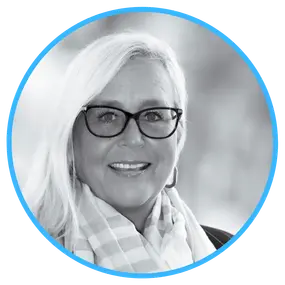
Founder and chairman Meningokockfonden
Christine started the Meningokockfonden (Meningitis Foundation) in Sweden when her son Mathias died in the summer of 2019 after contracting meningitis and septicemia. She set up the Foundation after becoming aware of how little information and understanding on meningitis there is in Sweden. The primary goal with the foundation is to share information and raise awareness to the public about the symptoms and the possibility of getting vaccinated so that other children and young people can be saved in the future.
Christine has a professional background as a CFO and top-level manager including board positions.
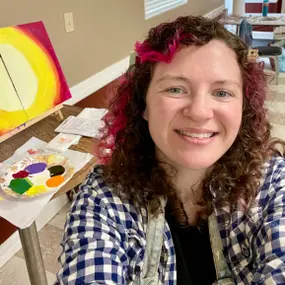
Meningitis Survivor
Bacterial meningitis and I began our difficult relationship in April 2009. During that time, the disease tried to take my life, but thanks to my mother and an incredible team of emergency healthcare professionals, I fought back. At the time, I wasn’t a student in college or boarding anywhere—I was a full-time employee living my life.
After a month in the hospital, surgery to address bacterial burns and nerve damage, months in a wheelchair, and enduring immense pain, I survived what would become one of the most challenging periods of my life. I count myself as one of the lucky ones. I have all my limbs and faculties, but my relationship with bacterial meningitis didn’t end when I left the hospital. Although I was “out of the woods,” the after-effects lingered. Nerve pain and mental health struggles continue to be a part of my life. My body will never be the same as it was before this encounter.
Despite everything, I’m now grateful for where I stand in this journey. It’s taken me a long time to make peace with what happened and who I’ve become. I am proud of who I am today and incredibly thankful for everyone and everything that has supported me along the way.
I share my story to raise awareness about this devastating disease and to show how art and creativity have helped me cope and bring light back into my life. My relationship with bacterial meningitis started as something dangerous and deadly, but now, we walk together—hoping it never forms a bond with anyone else.
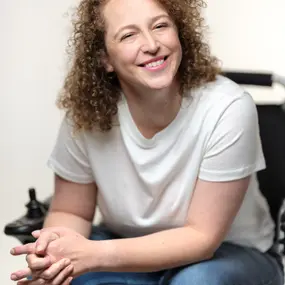
Artist, Writer, Advocate
Katie Thompson is an intuitive artist, writer and advocate based outside of Charleston, SC. Her multidisciplinary work explores abstractions of space and self as a disabled woman living in the rural south and has been exhibited and published internationally. She is also the author of children's woodworking book Little Beaver Builds a Bed, and recently created a new podcast, Chronicles of a Dreamworker. Katie is a patient advocate for causes such as meningitis and disability awareness after having a spinal cord injury and contracting bacterial meningitis at 18. She is also the creator of the Women of Woodworking project and serves on the Board of Trustees for The Furniture Society. Katie is married to her husband, furniture maker Joseph Thompson, and they have two children together.
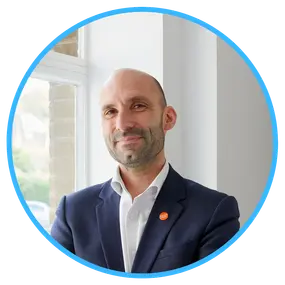
CEO
Dr Tom Nutt is CEO Meningitis Now, a UK-wide charity that funds scientific, medical and social research, raises awareness of meningitis and the importance of vaccines, and provides support to people and families who have been affected by meningitis.
Prior to that, was CEO of an award-winning health charity that aimed to improve health and care services by capturing the voice and lived experience of patients, service users and carers. He has also worked in health and care policy and was originally an academic historian based at the University of Cambridge, where he lectured and researched socio-economic and population history.